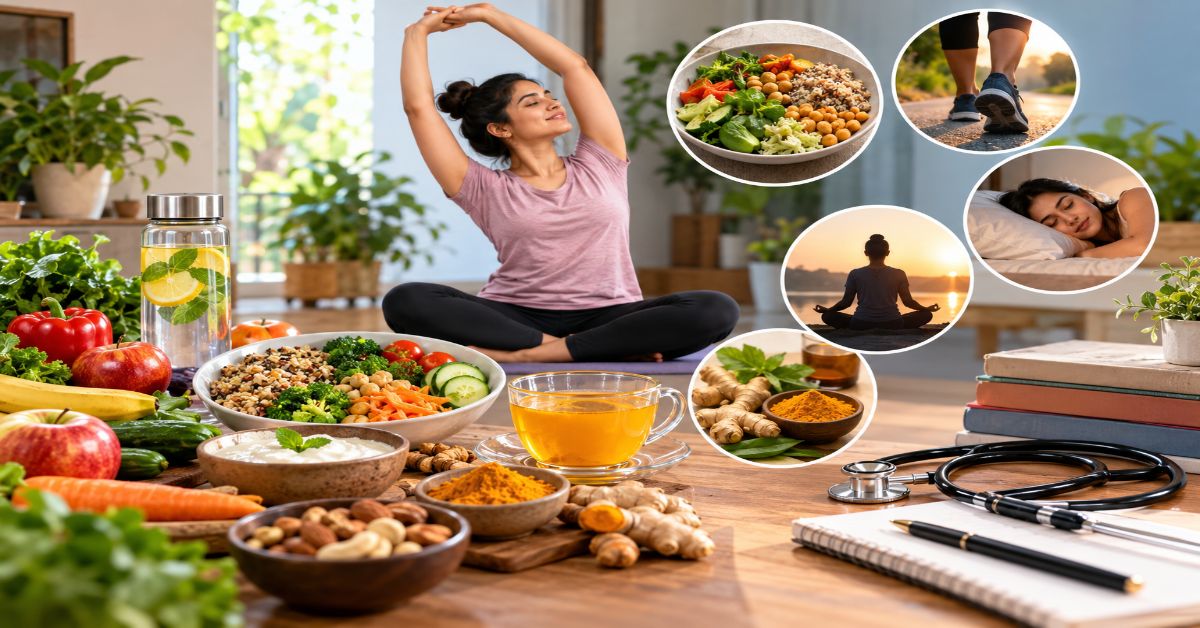
Well health tips in hindi wellhealthorganic should be read as a search for simple, culturally familiar wellness guidance—not as a reason to treat every natural remedy as proven medicine. The sharpest lesson from current health guidance is almost boring in its consistency: the habits with the strongest evidence are food quality, movement, sleep, lower tobacco and alcohol exposure, stress management, and timely medical care, while many “detox” or miracle-remedy claims sit on much weaker ground.
That matters because this keyword now produces a crowded mix of Hindi, Hinglish and English pages. Most offer the same ingredients—warm water, turmeric, ginger, yoga, seasonal food, hydration and early sleep—but they rarely show readers how to judge the strength of a claim. A home-kitchen habit can be low risk and culturally meaningful without being a treatment. A supplement can be “natural” and still cause side effects or interact with medicines.
This guide takes a different route. It builds an evidence hierarchy first, then turns it into a realistic daily routine for Indian households. The aim is not to reject Ayurveda or traditional food practices. It is to place them in the right layer: lifestyle support where evidence and safety are reasonable, and medical care where symptoms, medicines, pregnancy, chronic disease or red flags change the risk. That distinction makes everyday health advice more useful—and much harder to misuse.
What the Current Top Results Get Right—and Miss
A review of ten prominent current results for the target phrase showed a strong pattern: almost every page emphasizes natural living, basic diet advice, hydration, exercise, sleep, yoga, herbs and home remedies. That matches reader intent, but it also creates a sameness problem. The recurring weakness is not lack of tips; it is lack of evidence calibration and decision rules.
| Common SERP angle | What it does well | Gap this guide fills |
| Top-10/20 habit list | Fast, scannable and familiar | Ranks habits by evidence and risk instead of treating every tip as equal |
| Ayurveda/home remedies | Culturally relevant ingredients and routines | Separates food-level use from concentrated supplements and cure claims |
| 24-hour or 7-day routine | Makes advice actionable | Uses a minimum viable routine that can survive work, family and budget constraints |
| Hindi/Hinglish explanations | Improves accessibility | Adds precise thresholds from public-health guidance without losing plain language |
| “Natural immunity/detox” framing | Matches popular search language | Replaces vague detox claims with measurable behaviors and medical boundaries |
The Three-Layer Health Stack
The easiest way to use broad wellness advice safely is to sort it into three layers. This prevents a common error in health content: giving a turmeric drink, a walking habit and treatment for persistent symptoms the same level of authority.
Layer 1: High-value daily foundations
These are the habits worth protecting first because the evidence base is broad and the downside is usually low when adapted to the individual: varied whole foods, vegetables and fruit, adequate protein, regular physical activity, enough sleep, basic hygiene, stress regulation, vaccination and preventive care when appropriate. They are not glamorous, but they account for far more of day-to-day health than a rotating list of “superfoods.”
Layer 2: Optional traditional practices
Food-level use of ginger, turmeric, cumin, fennel, curd, buttermilk, herbal teas or yoga can fit comfortably into a healthy routine for many people. The important word is optional. These practices should support a good diet and activity pattern, not substitute for them. Evidence also differs by use: a spice used in cooking is not the same exposure as a high-dose extract.
Layer 3: Medical decisions
Persistent pain, unexplained weight change, repeated fainting, chest pain, difficulty breathing, severe dehydration, blood in vomit or stool, sudden weakness, pregnancy-related concerns, and medicine interactions are not “home remedy” problems. The same applies when a person has diabetes, kidney disease, liver disease, a bleeding disorder or other chronic conditions that can change what is safe.
Build the Plate Before Buying the Remedy
The strongest nutrition advice is remarkably consistent. WHO healthy-diet guidance recommends dietary variety, at least 400 g of fruits and vegetables per day for adults and children over 10, free sugars below 10% of energy, and sodium below 2 g per day—about 5 g of salt.
For an Indian household, that does not require imported “health foods.” Dal, chana, rajma, vegetables, fruit, curd, eggs, fish, lean meat, whole grains, nuts and seeds can do the heavy lifting. The better question is not whether a food is organic, Ayurvedic or trending; it is whether the overall pattern delivers enough nutrients without too much salt, sugar and heavily processed food.
A useful plate rule is simple: make vegetables and fruit visible at most meals, include a clear protein source, choose whole or minimally processed staples more often, and treat sweets, deep-fried snacks and sugary drinks as occasional rather than automatic. People with medical conditions or specific nutritional needs may require a clinician or dietitian to individualize this pattern.
A Minimum Viable Daily Routine
Instead of chasing a perfect 24-hour schedule, use a routine that still works on busy days. The target is repeatability.
| Part of day | Minimum useful action | Why it matters | What not to overcomplicate |
| Morning | Water as thirst requires; protein- and fibre-containing breakfast if you eat breakfast | Supports hydration and satiety | No need for “detox water” to make the morning healthy |
| Work/study hours | Break up long sitting; walk when practical | Adds movement beyond formal exercise | A smartwatch goal is optional, not the definition of health |
| Main meals | Vegetables/fruit + protein + staple carbohydrate | Improves diet quality and nutrient variety | Avoid rigid “clean eating” rules |
| Exercise window | Brisk walking, cycling, sport, yoga and/or strength work | Builds cardiovascular and muscular fitness | Do not jump from zero activity to extreme workouts |
| Evening | Reduce heavy late-night eating and create a wind-down cue | Supports sleep regularity | No single tea or supplement fixes chronic insomnia |
| Weekly | Review energy, sleep, movement and any persistent symptoms | Turns vague wellness into observable patterns | Do not self-diagnose from a checklist |
Movement: Count the Week, Not the Perfect Workout
WHO currently recommends that adults aim for about 150–300 minutes of moderate aerobic activity per week, or 75–150 minutes of vigorous activity, with muscle-strengthening work on at least two days. The physical-activity guidance also emphasizes that some movement is better than none.
That makes walking one of the most practical health tools available. A person who is inactive does not need to start with a gym membership. Ten- to thirty-minute walks, stairs, cycling, household activity and short strength sessions can build a base. Yoga can be part of that base, especially for mobility, balance and stress management, but beginners should avoid extreme poses and modify practice when pregnancy, older age, injuries or medical conditions change the risk.
Sleep Is a Health Habit, Not Spare Time
For adults aged 18–60, CDC sleep guidance lists 7 or more hours per day; older adults have slightly different recommended ranges. Sleep quality matters too, so a person who spends eight hours in bed but wakes repeatedly may still need attention.
The practical levers are less exciting than sleep gadgets: a reasonably stable sleep-wake time, a dark and comfortable room, lower late-evening stimulation, and avoiding a routine that depends on heavy meals, nicotine, excess caffeine or alcohol near bedtime. Persistent insomnia, loud snoring with daytime sleepiness, or breathing pauses deserves medical evaluation rather than endless experimentation with teas or supplements.
Hydration Without the “Detox” Story
Water is essential, but there is no universal rule that every healthy adult must drink exactly three or four litres per day. Needs change with body size, climate, pregnancy, activity, fever and medical conditions. Thirst, urine pattern, heat exposure and individual clinical advice are more useful than a viral number.
If headaches are recurring, hydration is only one possible factor. Rubble Magazine’s headache relief guide explains why headache type, medication frequency and red flags matter more than assuming every headache comes from low water intake.
Stress Management Works Better as a Skill
Breathing exercises, quiet walking, prayer, mindfulness, social connection, journaling and yoga can all be reasonable ways to reduce arousal. The mistake is treating “stress relief” as another item to perform perfectly. A technique is useful if it helps the nervous system settle and can be repeated under real-life conditions.
For a more detailed decision framework, the site’s evidence-based guide to relaxation compares short techniques for physical tension, racing thoughts and different time windows.
Mental health symptoms that are persistent, disabling or linked to self-harm, panic, trauma or major functional decline need qualified care. Wellness routines can support treatment; they should not become a reason to delay it.
How to Use Ayurveda-Style Tips Without Overclaiming
The safest way to approach traditional health practices is to distinguish culinary use, lifestyle practice and concentrated treatment. Cooking with turmeric or ginger is different from taking high-dose curcumin or ginger supplements. Yoga as a graded physical practice is different from promising that one pose can cure a disease.
NCCIH notes that turmeric has been widely studied but that evidence is still not strong enough to conclude that it is beneficial for most promoted health uses. It also warns that some highly bioavailable curcumin products have been linked with liver injury. Ginger has evidence for some specific uses, such as certain forms of nausea, but it can cause gastrointestinal side effects and may interact with medicines.
| Practice or claim | Evidence/risk signal | Practical interpretation |
| Turmeric or ginger in normal food amounts | Generally lower exposure than supplements | Reasonable as food if tolerated; do not sell it as a cure |
| Herbal tea for comfort | May help hydration or routine; effect depends on ingredients | Use as a beverage, not a substitute for treatment |
| High-dose herbal extract | Higher exposure; interaction and side-effect risk | Check with a clinician or pharmacist if using medicines or managing chronic disease |
| Yoga or breathing practice | Useful wellness practice for many people when adapted safely | Start gradually; modify for pregnancy, older age, injuries or medical conditions |
| “Detox,” “cures diabetes,” “melts fat,” “boosts immunity instantly” | Red-flag marketing language | Demand strong clinical evidence; do not replace prescribed care |
A Traffic-Light Test for Any Health Tip
When a new remedy appears on WhatsApp, YouTube, Instagram or a wellness blog, classify it before trying it.
- Green: low-risk habits with broad support—walking, sleep regularity, varied food, basic hydration, hygiene, social connection and sensible stress management.
- Amber: plausible or traditional practices with context-dependent evidence—specific herbs, supplements, fasting patterns, restrictive diets or intense yoga. Check dose, interactions, pregnancy status and medical conditions.
- Red: claims that a food or remedy cures serious disease, replaces prescribed medicine, “detoxifies” the body in a vague way, or guarantees rapid weight loss. These claims need strong evidence and often deserve professional review before action.
Make the Routine Easier Than the Excuse
A routine fails when it asks for too many decisions. Start with two anchors: one food anchor and one movement anchor. For example, add vegetables to the main meal and walk for 20 minutes after work. Hold those steady for two weeks before adding another target. This creates evidence of consistency instead of a burst of motivation followed by collapse.
That approach matches the broader habit-building logic in Rubble Magazine’s personal development system: focus on a small capability, practice it in real conditions, collect feedback and review whether the goal is still worth its cost.
Health Advice Also Needs Emotional Boundaries
Wellness content can create pressure: perfect meals, perfect sleep, perfect skin, perfect routines. A healthy plan should reduce friction, not turn ordinary variation into failure. If another person’s anxiety, expectations or constant health checking are driving your routine, the problem may be the boundary rather than the missing supplement.
The site’s empath guide on science and boundaries is useful here because it separates emotional resonance from overbroad identity claims and focuses on practical limits.
When Home Wellness Advice Should Stop
General health tips are designed for prevention and everyday self-care. They are not a diagnosis. Seek urgent care for severe chest pain, severe breathing difficulty, fainting with ongoing symptoms, sudden one-sided weakness, severe allergic reaction, uncontrolled bleeding, or other rapidly worsening symptoms. Persistent fever, unexplained weight loss, repeated vomiting, chronic diarrhea, ongoing sleep problems, new neurological symptoms or symptoms that keep returning also deserve clinical assessment.
People who are pregnant, older, managing chronic disease, taking multiple medicines, or considering concentrated herbal supplements should use a lower threshold for professional advice. “Natural” is a description of origin, not a guarantee of safety.
The Future of Everyday Wellness in 2027
The likely 2027 shift is not toward one new miracle ingredient. It is toward more measurement, personalization and content verification. Wearables and phone-based health tools can already track sleep timing, steps, heart rate and activity patterns; their value will depend on whether the data changes a useful behavior rather than simply generating more anxiety.
A second trend is evidence labeling. Wellness publishers face growing pressure to distinguish traditional use, early research, established guidance and unsupported claims. That is especially important for Hindi and regional-language health content, where a short social-media clip can strip away the caution that was present in an original source.
The third trend is integration. Good consumer health content will increasingly need to tell readers when a habit belongs in everyday life and when it belongs in a clinician’s office. That boundary is not anti-natural wellness. It is what makes natural wellness safer and more credible.
Key Takeaways
- Protect the basics first: varied food, regular movement, adequate sleep, stress regulation and preventive care beat most novelty-based wellness hacks.
- Use traditional foods and practices as supportive habits, not as automatic treatments for disease.
- For adults, WHO activity guidance centers on 150–300 minutes of moderate activity weekly plus strength work on at least two days.
- Do not force a universal water target; hydration needs vary with climate, activity, pregnancy and health conditions.
- Treat concentrated herbal supplements differently from culinary use because dose, interactions and side effects change the risk.
- A useful health tip should tell you its limits. Cure promises, vague detox language and replacement of prescribed care are warning signs.
- Consistency is the practical advantage: two habits sustained for months are more valuable than ten habits followed for three days.
Conclusion
The best way to interpret well health tips in hindi wellhealthorganic is as a doorway into everyday wellness—not a shortcut around evidence. Natural food, culturally familiar routines, yoga, walking, sleep and simple stress-management practices can all have a place. The mistake begins when every traditional habit is promoted as a treatment or every supplement is assumed to be safe because it came from a plant.
A stronger health routine is layered. Build the high-evidence foundation first. Add optional practices when they are safe and genuinely useful. Escalate to medical care when symptoms, medicines, pregnancy or chronic conditions change the stakes. That approach is less dramatic than a detox challenge, but it is more durable, more affordable and easier to defend against misinformation. The real goal is not to collect health tips. It is to build a system that keeps good decisions easy and risky claims easy to spot.
Frequently Asked Questions
What are well health tips in Hindi WellHealthOrganic?
The phrase generally refers to simple health and wellness advice associated with natural living, Indian food traditions, Ayurveda-style practices, fitness, sleep, skin care and home remedies. The safest interpretation is to use these ideas as lifestyle support while checking stronger medical or supplement claims against reliable health sources.
Are WellHealthOrganic-style tips medically proven?
Some recommendations, such as regular activity, varied food and adequate sleep, are strongly supported by public-health guidance. Others, especially herbal remedies and supplements, have mixed or limited evidence depending on the ingredient, dose and condition. Traditional use alone does not prove a treatment effect.
Which daily health habits matter most?
For most adults, the strongest foundation is a varied diet, regular movement, adequate sleep, not smoking, sensible alcohol choices, stress management and appropriate preventive care. The exact plan should be adapted for age, pregnancy, medications, chronic disease, disability and individual nutritional needs.
How much exercise should an adult do each week?
WHO recommends roughly 150–300 minutes of moderate aerobic activity per week, or 75–150 minutes of vigorous activity, plus muscle-strengthening activity on at least two days. People who are currently inactive can start lower and build gradually.
Is turmeric safe to use every day?
Turmeric used as a normal culinary spice is different from concentrated curcumin supplements. NCCIH says evidence for many promoted health benefits remains uncertain, and some highly bioavailable formulations have been associated with liver injury. People taking medicines, pregnant people and those with health conditions should discuss supplements with a clinician.
Do I need three litres of water every day?
Not necessarily. Water needs vary with body size, climate, activity, diet, pregnancy and medical conditions. A fixed number can be misleading. Drink regularly, pay attention to thirst and heat exposure, and follow clinical advice if you have kidney, heart or other conditions that affect fluid balance.
When should I stop using home remedies and see a doctor?
Seek medical care when symptoms are severe, sudden, persistent, recurrent or worsening, or when there are red flags such as chest pain, breathing difficulty, fainting, sudden weakness, uncontrolled bleeding or significant dehydration. Home remedies should not delay urgent assessment or replace prescribed treatment.
Methodology
This article was researched on October 1, 2026. Before drafting, I reviewed ten prominent current results surfaced for the exact keyword and close variants: Perplexity AI Magazine, WellHealthOrganic, ProThots, BeautyTipsWellHealthOrganic, AllWellHealthOrganic, Culture Input, The-WellHealthOrganic, Business Magazine, CureCartDirect and HealthSurgeon. Search rankings vary by country, device, personalization and time, so this is a competitive sample rather than a permanent universal Google top 10.
The recurring SERP strengths were accessibility, natural-living language, familiar ingredients, habit lists and practical routines. The recurring weaknesses were unsupported detox language, weak distinction between food and supplements, repeated structure, and little help deciding which claims are strong, optional or risky. I therefore built the article around an evidence hierarchy and a traffic-light decision tool rather than mirroring competitor section order.
Factual validation prioritized current WHO healthy-diet and physical-activity guidance, CDC sleep guidance, and NCCIH safety summaries for turmeric, ginger and yoga. These sources provide population guidance and safety context; they do not create an individualized medical plan. Evidence on specific traditional remedies can be condition-specific, dose-specific and incomplete.
References
Centers for Disease Control and Prevention. (2024, May 15). About sleep. National Center for Chronic Disease Prevention and Health Promotion.
National Center for Complementary and Integrative Health. (n.d.). Ginger: Usefulness and safety. U.S. National Institutes of Health.
National Center for Complementary and Integrative Health. (n.d.). Turmeric: Usefulness and safety. U.S. National Institutes of Health.
National Center for Complementary and Integrative Health. (n.d.). Yoga: Effectiveness and safety. U.S. National Institutes of Health.
World Health Organization. (2024, June 26). Physical activity.
World Health Organization. (2026). Healthy diet. Health topics.
World Health Organization & Food and Agriculture Organization of the United Nations. (2024, October 24). What are healthy diets? Joint statement.