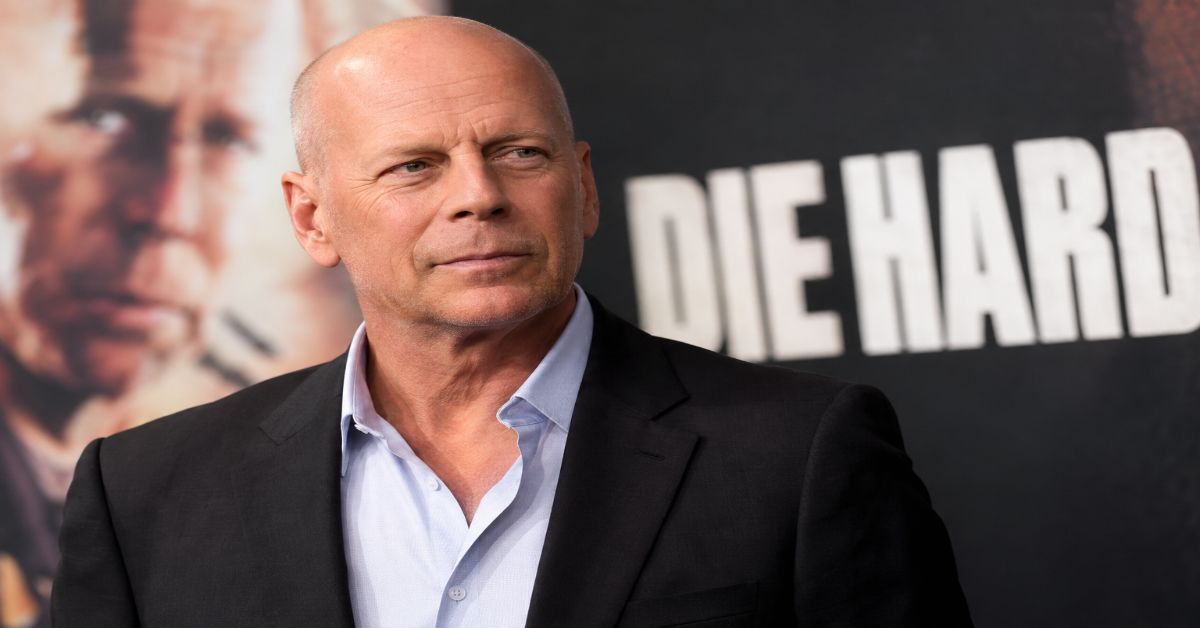
Bruce Willis is a retired American actor best known for turning the wisecracking detective David Addison in Moonlighting into the everyman action hero John McClane in Die Hard. His career spans television, blockbuster action, comedy, prestige films and Broadway, while his public life in 2026 is shaped by his family’s efforts to support him as he lives with frontotemporal dementia (FTD).
What makes Bruce Willis unusually difficult to summarize is the gap between the simple image—bald action star, sarcastic one-liners, Die Hard—and the much broader career underneath it. I find the clearest way to understand his legacy is to follow the turning points: the stage work that came before fame, Moonlighting’s breakthrough, Die Hard’s gamble, Pulp Fiction’s reinvention, a long run of commercial films, and the 2022 retirement that ended his acting career. His story is not only about a character who refused to quit; it is also about how a performer’s public identity can change when illness changes what work is possible.
As of September 2026, Willis is 71. His family continues to share selective updates rather than presenting a conventional celebrity-news narrative. In September, Emma Heming Willis described the reality of caring for him as difficult while also emphasizing that he remains capable of meaningful moments of connection. Entertainment Weekly reported that he attended daughter Tallulah Willis’s August 2026 wedding, another rare public appearance. (Entertainment Weekly, 2026; Parade, 2026)
Who is Bruce Willis?
Walter Bruce Willis was born on March 19, 1955, in Idar-Oberstein, then West Germany, where his father was stationed with the U.S. military. His family later moved to New Jersey. Before becoming a recognizable screen actor, Willis worked a series of ordinary jobs, studied drama at Montclair State University, moved to New York, and pursued stage acting. Biography.com records early work in off-Broadway productions and small film and television roles before the audition that changed his career. (Biography.com, 2025)
His first major television breakthrough came with Moonlighting, the ABC detective dramedy that paired him with Cybill Shepherd. The Television Academy describes Willis’s David Addison as a fast-talking private investigator and records that the series received major industry recognition. Willis won the 1987 Emmy for Outstanding Lead Actor in a Drama Series for Moonlighting, then later won another Emmy for his guest role on Friends in 2000. (Television Academy, 2026)
That progression matters because Willis did not arrive in Hollywood as a conventional action star. Comedy, timing and improvisational energy were central to his early appeal. Die Hard then converted those qualities into a new kind of action protagonist: physically vulnerable, frequently sarcastic and more recognizably human than the invincible heroes common to the genre.
How did Bruce Willis become famous?
The short answer is Moonlighting made Willis recognizable, but Die Hard made him a global movie star. Moonlighting established his screen personality; Die Hard gave that personality a cinematic vehicle that could travel far beyond television.
Moonlighting changed the trajectory
Moonlighting premiered in 1985 and ran through 1989. Willis played David Addison, a private detective whose rapid-fire banter with Shepherd’s Maddie Hayes became one of the show’s defining features. The Television Academy’s historical material notes the program’s unusual mix of drama and comedy and its importance to the development of the dramedy format. (Television Academy, 2026)
The performance also produced a crucial piece of evidence about Willis’s range. Before audiences primarily associated him with gunfights and damaged police officers, his strongest professional credential was comic timing. That became an advantage when Die Hard required an action lead who could carry tension without becoming humorless.
Die Hard created John McClane
Released in 1988, Die Hard cast Willis as New York police officer John McClane, trapped inside Nakatomi Plaza during a terrorist takeover. The film transformed him from a successful television actor into one of the most recognizable action stars of his generation. The Washington Post’s retrospective on the casting notes that Willis initially faced scheduling problems because of Moonlighting before the show’s production pause created an opening for him to make the film. (Washington Post, 2023)
The distinction is important: McClane was not simply another physically dominant action hero. He was tired, sarcastic, frightened and repeatedly injured. Willis’s ability to combine those traits with comic timing helped make the character durable enough to anchor five Die Hard films.
What are Bruce Willis’s most important movies?
A useful filmography is not necessarily the same thing as a list of the biggest titles. For understanding Willis’s career, the more revealing approach is to identify the films that changed what audiences expected from him.
| Film | Year | Why it matters |
| Die Hard | 1988 | Established John McClane and Willis as a major action star. |
| Pulp Fiction | 1994 | Placed Willis inside Quentin Tarantino’s ensemble and showed his willingness to work outside a conventional action formula. |
| 12 Monkeys | 1995 | Added darker science-fiction drama to his post-Die Hard filmography. |
| The Fifth Element | 1997 | Reinforced his international blockbuster appeal through science-fiction action. |
| Armageddon | 1998 | Made him the emotional center of a large-scale commercial spectacle. |
| The Sixth Sense | 1999 | Showed he could carry a restrained supernatural drama rather than relying on action. |
| Unbreakable | 2000 | Used his quiet, understated presence in a character-driven superhero story. |
| Sin City | 2005 | Returned him to stylized crime storytelling and ensemble action. |
| Looper | 2012 | Paired him with Joseph Gordon-Levitt in a time-travel science-fiction story. |
The table shows why reducing Willis to Die Hard leaves out a substantial part of his appeal. Rotten Tomatoes’ filmography similarly highlights the contrast between action successes, comedies, science fiction and more restrained roles. The Academy’s Pulp Fiction archive also identifies Willis among the film’s central cast, placing his Butch Coolidge performance inside one of the defining American films of the 1990s. (Rotten Tomatoes, 2026; Academy of Motion Picture Arts and Sciences, 2026)
Why was Pulp Fiction important to Bruce Willis?
Pulp Fiction was a career-defining detour because Willis was already an established action star when he accepted the role of Butch Coolidge. Instead of protecting the image created by Die Hard, he entered Quentin Tarantino’s fractured crime story as a boxer trying to escape a fixed outcome. The Academy notes that the 1994 film combined hardboiled crime conventions with the independent-film sensibility of its era and featured Willis alongside John Travolta, Uma Thurman and Samuel L. Jackson. (Academy of Motion Picture Arts and Sciences, 2026)
The practical lesson from the role is more interesting than the usual “comeback” framing. Willis did not need to abandon his action persona; he needed to place it in different dramatic contexts. That flexibility became one of the reasons his career lasted for decades rather than ending with the first decline in the Die Hard formula.
How many awards has Bruce Willis won?
The Television Academy lists two Primetime Emmy wins for Willis: Outstanding Lead Actor in a Drama Series for Moonlighting in 1987 and Outstanding Guest Actor in a Comedy Series for Friends in 2000. The Academy’s records also show his 1986 Emmy nomination for Moonlighting. (Television Academy, 2026)
Willis also received a star on the Hollywood Walk of Fame. The official Walk of Fame record lists his motion-picture star ceremony as October 16, 2006. The same record identifies him with more than sixty films and notes the North American box-office total attributed to films featuring him. (Hollywood Walk of Fame, 2026)
Who is Bruce Willis’s family?
Willis has five daughters. He shares Rumer, Scout and Tallulah with Demi Moore, whom he married in 1987 and divorced in 2000. He later married Emma Heming Willis in 2009, and they have two daughters, Mabel and Evelyn. ABC News reported in March 2026 that the family continues to support him and described the blended family structure that has remained visible around him. (ABC News, 2026)
The family story is relevant to understanding Willis’s current public life because his daughters and both his wife and former wife have become the main sources of updates. That is a different media pattern from his film career: the audience is no longer primarily receiving information from studio publicity, premieres or interviews about upcoming projects. It is receiving occasional windows into family life, caregiving and remembrance.
That distinction also calls for restraint. Public reporting about a serious neurological illness can easily slide from factual updating into speculation about symptoms, prognosis or private care arrangements. I would not treat every viral claim about Willis’s condition as evidence. The reliable baseline is what his family has publicly said and what reputable reporting documents.
| Family member | Relationship to Bruce Willis | Publicly documented context |
| Demi Moore | Former wife | Married 1987–2000; mother of Rumer, Scout and Tallulah. |
| Emma Heming Willis | Wife | Married in 2009; has spoken publicly about caregiving and FTD awareness. |
| Rumer Willis | Daughter | Oldest daughter; has shared public updates about her father. |
| Scout Willis | Daughter | One of Bruce Willis and Demi Moore’s three daughters. |
| Tallulah Willis | Daughter | Youngest daughter with Demi Moore; Bruce attended her August 2026 wedding. |
| Mabel Ray Willis | Daughter | Daughter of Bruce and Emma Heming Willis. |
| Evelyn Penn Willis | Daughter | Daughter of Bruce and Emma Heming Willis. |
What happened to Bruce Willis’s health and acting career?
Willis retired from acting in March 2022 after his family announced that he had been diagnosed with aphasia, a condition that can affect communication. In February 2023, the family announced that his condition had progressed to frontotemporal dementia. This sequence matters because aphasia describes a communication impairment, while FTD is a broader neurodegenerative disease category that can affect language, behavior and executive functions. (Biography.com, 2025; AFTD, 2026)
The Association for Frontotemporal Degeneration explains that primary progressive aphasia is an FTD-associated clinical syndrome involving a gradual loss of the ability to speak, read, write or understand language. Its current educational material also emphasizes that FTD has different clinical presentations rather than one uniform symptom pattern. (AFTD, 2026)
Emma Heming Willis has repeatedly tried to correct the public tendency to equate dementia automatically with total memory loss. In September 2026, she said Bruce still recognizes her and described the family as adapting to his changing condition. Entertainment Weekly separately reported her comments that he remains “very present” and that the family still experiences moments of connection and joy. These are family observations, not an independent clinical assessment, and should be understood that way. (Parade, 2026; Entertainment Weekly, 2026)
That distinction is one of the most important facts to preserve in any current article about Willis. FTD is not interchangeable with Alzheimer’s disease, and a celebrity’s diagnosis should not be used to make assumptions about another person’s symptoms. The medical information in this article is contextual rather than diagnostic.
What is known about Bruce Willis in 2026?
The most recent public reporting gives a picture of a retired actor whose family is closely involved in his life. Entertainment Weekly reported that Willis attended Tallulah Willis’s wedding in August 2026. In September, Emma Heming Willis discussed caregiving and the emotional difficulty of progressive illness while also stressing continued connection. (Entertainment Weekly, 2026; Parade, 2026)
Those details are more useful than rumors because they answer the question people are actually asking: what is his life like now? The public record supports saying that Willis remains alive, retired from acting, living with FTD and surrounded by a family that continues to share selected updates. It does not support predicting the course of his illness or describing private medical details that the family has not confirmed.
Bruce Willis career timeline
| Year | Career milestone |
| 1955 | Born in Idar-Oberstein, West Germany. |
| 1980s | Builds stage and television credits before his major breakthrough. |
| 1985 | Moonlighting begins on ABC; Willis becomes widely known as David Addison. |
| 1987 | Wins the Primetime Emmy for Outstanding Lead Actor in a Drama Series. |
| 1988 | Die Hard turns him into a major movie star. |
| 1994 | Stars as Butch Coolidge in Pulp Fiction. |
| 1998–1999 | Leads Armageddon and The Sixth Sense, two major late-1990s successes. |
| 2000 | Wins a second Primetime Emmy for Friends. |
| 2006 | Receives a star on the Hollywood Walk of Fame. |
| 2012 | Appears in Looper, another major science-fiction role. |
| 2015 | Makes his Broadway debut in Misery. |
| 2022 | Retires from acting following an aphasia diagnosis. |
| 2023 | Family announces a frontotemporal dementia diagnosis. |
| 2026 | Family continues to provide occasional public updates; Willis makes a rare appearance at Tallulah’s wedding. |
What can Bruce Willis’s career teach us about longevity in Hollywood?
Willis’s career offers three concrete lessons. First, typecasting can be useful before it becomes restrictive. John McClane made Willis synonymous with a particular kind of action hero, but his strongest periods also included comedy, science fiction and quiet drama. Second, career longevity often comes from changing the context around a recognizable persona rather than destroying that persona. Pulp Fiction, The Sixth Sense and Unbreakable all used the audience’s existing expectations of Willis while asking him to do something different.
Third, longevity is not the same as constant critical success. Willis worked at a remarkable volume, especially later in his career, and that produced both well-regarded films and poorly received direct-to-video titles. A useful biography should include both. Leaving out the weaker period creates a polished myth rather than a credible career record.
This is also where current search results leave an opening. Many Bruce Willis pages either function as static biographies or chase the latest health headline. A stronger evergreen page can connect the two: explain why the actor became famous, document the film career, identify the family structure, and then separate verified 2026 updates from speculation.
The Future of Bruce Willis in 2027
There is no reliable basis for predicting whether Willis will make another film, return to public appearances, or experience a particular medical outcome. His retirement from acting and his family’s public statements make a return to regular professional work unlikely to be something readers should assume, but that is different from claiming a future event that has not been announced.
The more defensible 2027 angle is therefore archival rather than predictive. Interest in Willis is likely to remain tied to three durable subjects: his place in action-film history, the continuing cultural life of Die Hard and his family’s public advocacy around frontotemporal dementia and caregiving. The latter is particularly important because FTD education is an evolving area, and the Association for Frontotemporal Degeneration continues to publish updated material on diagnosis, language symptoms and care. (AFTD, 2026)
Key takeaways
- Bruce Willis became a major star in two stages: Moonlighting established his television identity, and Die Hard established his film persona.
- His career was broader than action films, with important roles in Pulp Fiction, 12 Monkeys, Armageddon, The Sixth Sense, Unbreakable, Sin City and Looper.
- The Television Academy records two Primetime Emmy wins: one for Moonlighting and one for Friends.
- Willis has five daughters, with three from his marriage to Demi Moore and two with Emma Heming Willis.
- He retired from acting in 2022 after an aphasia diagnosis; his family announced a frontotemporal dementia diagnosis in 2023.
- Public 2026 updates should be read through family statements and reputable reporting rather than viral claims or speculation.
- For readers researching Willis today, the most useful distinction is between his documented career history, verified family updates and information that remains private or uncertain.
Conclusion
Bruce Willis remains one of the clearest examples of how a performer can become larger than the role that made him famous. Moonlighting gave him the comic timing and personality that audiences recognized; Die Hard transformed those traits into an action-star formula; Pulp Fiction, The Sixth Sense and other films showed that the formula could be stretched without losing the audience’s interest.
Today, the relevant story is different. Willis is retired from acting and living with frontotemporal dementia, while his family manages a private reality that occasionally becomes public through interviews and major family moments. The latest reporting in 2026 emphasizes adaptation, connection and the limits of what outsiders can know. That is the responsible way to approach his current story: preserve the remarkable career record, report confirmed updates, and avoid turning an illness into speculation. His screen legacy can be discussed in full without pretending that the private parts of his present life are public property.
Frequently Asked Questions
How old is Bruce Willis?
Bruce Willis was born on March 19, 1955. He is 71 years old as of September 2026.
Is Bruce Willis still alive?
Yes. As of September 2026, Bruce Willis is alive. He retired from acting in 2022 and has continued to receive occasional public updates from his family.
What is Bruce Willis’s diagnosis?
His family announced that he had been diagnosed with aphasia in 2022 and later announced a diagnosis of frontotemporal dementia in 2023.
How many children does Bruce Willis have?
Bruce Willis has five daughters: Rumer, Scout, Tallulah, Mabel and Evelyn.
Who is Bruce Willis married to?
Bruce Willis has been married to Emma Heming Willis since 2009. He was previously married to Demi Moore from 1987 until their divorce in 2000.
What is Bruce Willis best known for?
He is best known for playing John McClane in the Die Hard franchise and David Addison in Moonlighting. Other major films include Pulp Fiction, The Sixth Sense, Armageddon and Unbreakable.
What happened to Bruce Willis’s acting career?
Willis retired from acting in March 2022 after his family announced an aphasia diagnosis. His family later announced that his condition had progressed to frontotemporal dementia.
Methodology
I researched the current search landscape for the query “Bruce Willis” and reviewed a set of prominent biography, filmography, awards, family and current-update pages surfaced by search, including Biography.com, Wikipedia, IMDb, Rotten Tomatoes, Fandango, the Hollywood Walk of Fame, the Television Academy, ABC News, AARP and Entertainment Weekly. I then cross-checked key career and health claims against primary or specialist sources where available, including the Television Academy, the Academy of Motion Picture Arts and Sciences, the Hollywood Walk of Fame and the Association for Frontotemporal Degeneration.
The article deliberately separates durable biography from 2026 news. Family statements are attributed to the family or to the publication reporting them; they are not presented as independent medical findings. The article does not attempt to diagnose Willis, predict his prognosis or infer private details that have not been publicly verified.
AI assistance was used in drafting and research organization. A human editor should review the article before publication, verify every named claim and reference, confirm that any internal links are live, and ensure that first-person analytical language accurately reflects the publication’s editorial standards.
References
Academy of Motion Picture Arts and Sciences. (2026). Pulp Fiction.
AARP. (2026). Rumer Willis on Bruce Willis, 71, and life with FTD.
Association for Frontotemporal Degeneration. (2026). Primary progressive aphasia and FTD resources.
ABC News. (2026). Bruce Willis is a dad of 5: What to know about his family.
Biography.com. (2025). Bruce Willis: His journey from stalled actor to action star.
Hollywood Walk of Fame. (2026). Bruce Willis.
Rotten Tomatoes. (2026). Bruce Willis movies and TV shows list.
Television Academy. (2026). Bruce Willis: Emmy Awards and nominations.